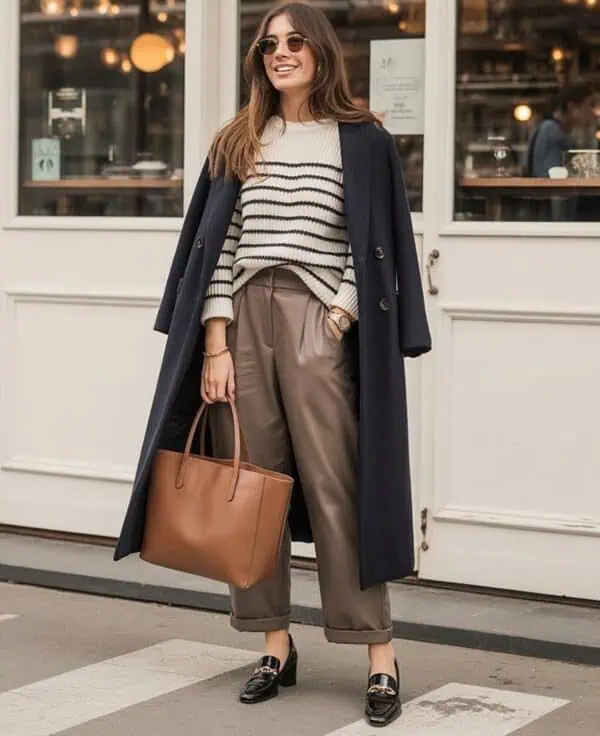
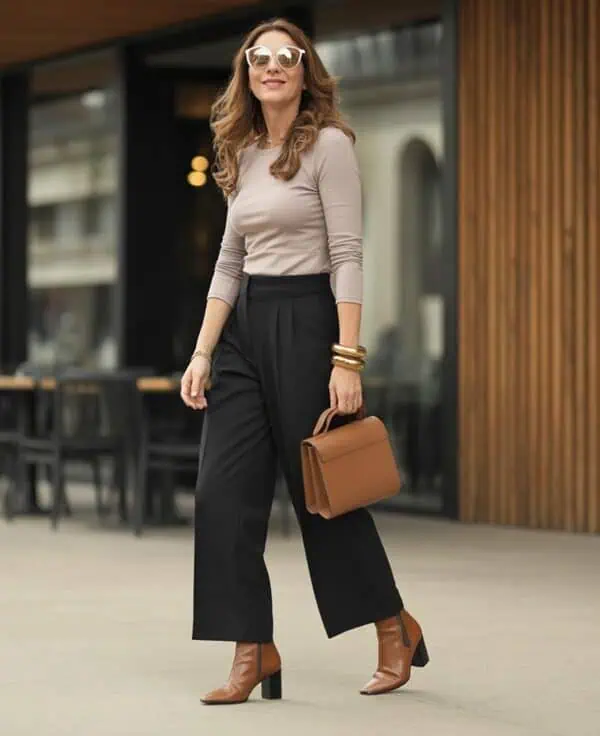
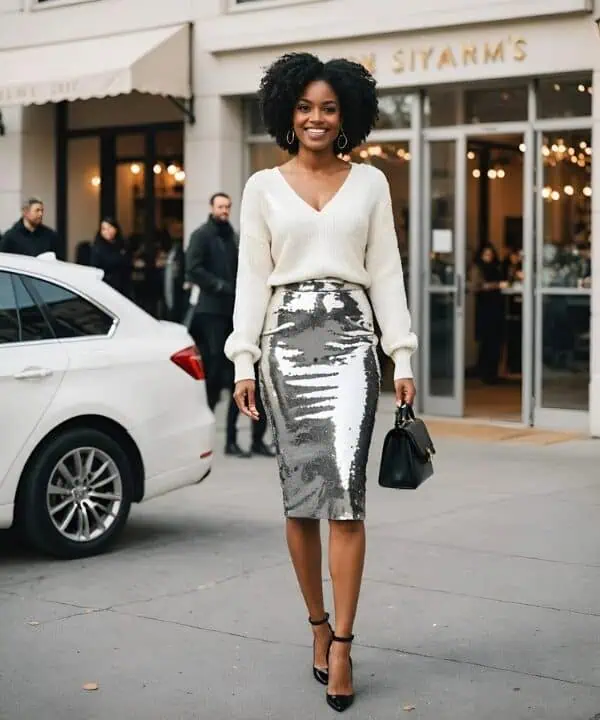
After 60, many women want clothing to feel comfortable and elegant while still creating a streamlined, flattering silhouette. The goal isn’t to appear smaller it’s to look balanced, lifted, and visually light. Subtle shifts in proportion, fabric, color placement, and styling technique can reshape how the eye reads the body without restrictive garments or drastic wardrobe changes. Mature style benefits especially from clarity: clean lines, gentle structure, and thoughtful emphasis points. These ten tricks work because they refine perception rather than forcing fit, helping outfits feel harmonious and intentional.
Table of Contents
1. Create Vertical Pathways
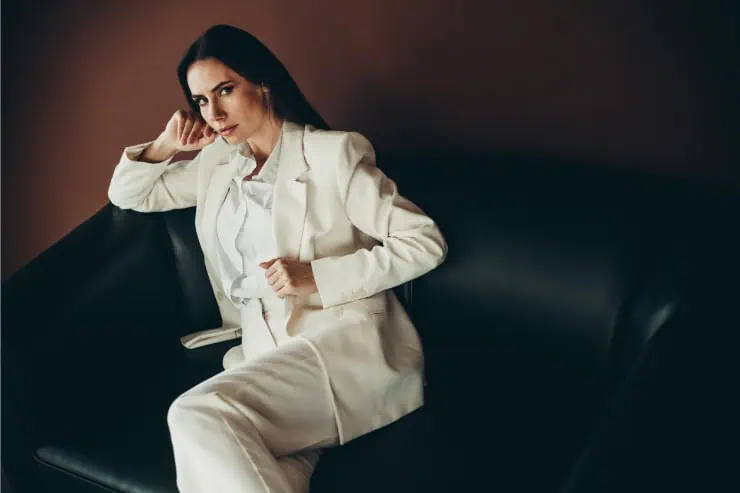
Vertical visual lines guide the eye up and down the body rather than across it, producing an elongating and slimming effect. These pathways can come from open cardigans, long necklaces, center seams, front closures, or tonal color columns. Wearing similar shades from shoulder to hem avoids abrupt breaks that widen perception. Even subtle vertical elements like pressed trouser creases or scarf drapes lengthen silhouette reading. This technique is especially effective after 60 because it refines proportion without relying on tightness.
2. Choose Soft Structure Over Stiffness

Garments that are either too rigid or too clingy can exaggerate volume. Softly structured fabrics such as ponte, crepe, or refined knits skim the body gently while holding shape. This creates a smooth outer line that visually streamlines contours. Stiff materials may stand away from the body, adding bulk, while thin clingy fabrics highlight unevenness. Soft structure offers balance: support without compression. Tailored yet forgiving jackets, dresses with shaping seams, and trousers with gentle drape all contribute to a cleaner silhouette.
3. Define the Waist Subtly

Waist definition restores proportion between upper and lower body, but harsh cinching can feel uncomfortable or dated. A gentle inward suggestion through seaming, wrap shapes, soft belts, or strategic tucks creates shape without restriction. Even a slight waist cue prevents garments from hanging straight from shoulders to hips, which can widen perception. Dresses with drape or tops that taper lightly at the midsection achieve this effect gracefully. After 60, the goal is soft shaping rather than tight contouring.
4. Keep Layers Different Lengths

When multiple garments end at the same point on the body, they create a horizontal line that visually broadens that area. Varying lengths such as a shorter jacket over a longer top or a cropped layer with high-waisted bottoms restores vertical flow. Staggered hems guide the eye smoothly downward, elongating perception. This also prevents bulky stacking at the hips, a common issue in layered outfits. After 60, varied lengths maintain sophistication while reducing heaviness. Even small differences of a few inches can change silhouette reading significantly. Length variation is one of the simplest ways to make layered outfits appear lighter and slimmer.
5. Favor Mid Weight Fabrics

Very heavy fabrics add volume, while very thin fabrics may cling. Mid-weight materials strike the ideal balance by draping smoothly without collapsing or standing away. Wool blends, structured jerseys, and refined cotton blends maintain clean lines across the body. These fabrics move with the wearer while preserving shape, preventing bunching or sagging that disrupts silhouette. After 60, consistent fabric weight across an outfit also improves cohesion, making the body appear more streamlined underneath. Choosing mid-weight textiles ensures garments neither exaggerate contours nor obscure them, supporting a refined and balanced appearance that naturally reads slimmer.
6. Use Dark Placement Strategically

Dark tones visually recede, meaning areas in darker colors draw less attention and appear smaller. Strategic placement such as darker trousers with a lighter top or darker side panels on a dress reshapes perception instantly. This approach is more effective than wearing all dark, which can look heavy. Contrast guides the eye toward lighter areas and away from darker ones, subtly sculpting silhouette. After 60, thoughtful color placement maintains brightness near the face while minimizing areas of concern.
7. Show the Slimmest Points

Exposing naturally narrower areas wrists, forearms, ankles, or the base of the neck lightens the overall silhouette. When these points are visible, the eye reads the body as more delicate and elongated. Rolling sleeves to the forearm, choosing ankle-length trousers, or selecting open necklines introduces contrast between fabric and skin. This breaks up large blocks of material that might otherwise appear heavy. After 60, this technique adds refinement without discomfort or trend dependence.
8. Avoid Excess Bulk in Layers

Layering adds warmth and interest but can easily accumulate volume. Choosing lighter layers and limiting how many overlap in the same area keeps the silhouette clean. For example, a thin knit under a softly structured jacket maintains warmth without thickness. Bulky scarves or multiple heavy knits stacked together can enlarge perception around the torso. After 60, strategic layering focuses on distribution ensuring volume isn’t concentrated at the midsection.
9. Align Hems with Flattering Points

Hem placement strongly affects proportion. Skirts or dresses that end at the knee, just below it, or mid-calf often elongate the leg line more than mid-thigh or widest-calf lengths. Tops that end above the fullest hip area maintain torso definition, while longer tunics may widen perception. Sleeve hems also matter: forearm or wrist lengths appear slimmer than mid upper arm cuts. After 60, aligning hems with narrower body points maintains vertical flow and prevents visual interruption.
10. Keep Outfits Visually Cohesive
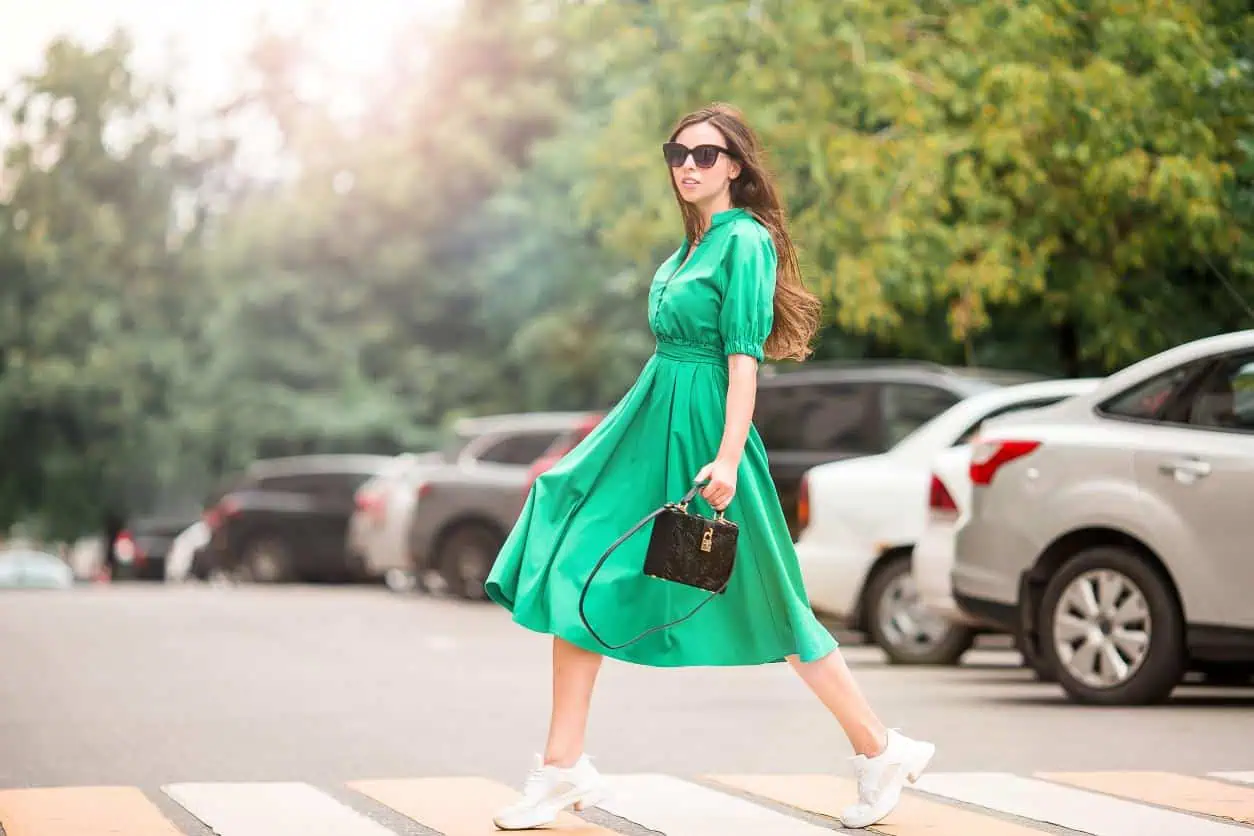
A cohesive outfit consistent palette, compatible textures, and aligned proportions reads as streamlined to the eye. Disjointed elements create visual stops and starts that widen perception. Coordinating tones within a limited range creates smooth transitions across the body, while harmonious fabrics maintain unity. After 60, cohesion enhances sophistication and reduces cluttered visual noise. This doesn’t mean matching exactly; it means ensuring pieces relate clearly. When the eye moves fluidly across an outfit, the body appears more continuous and elongated.