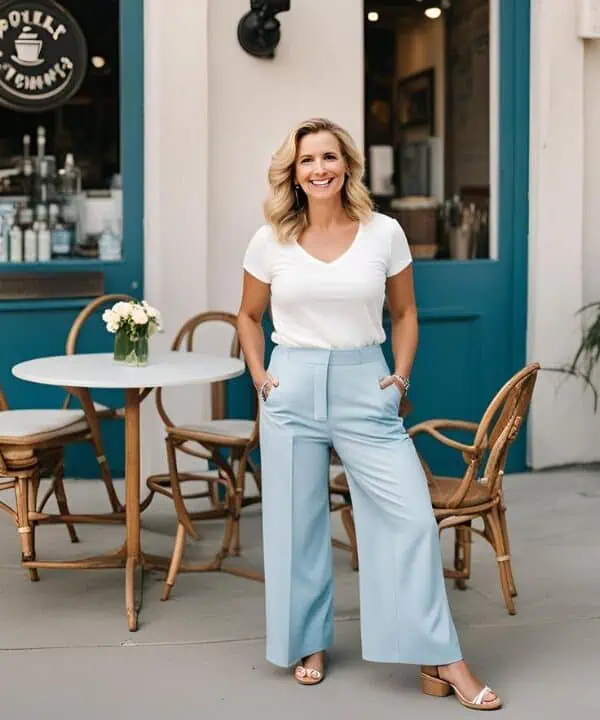
Black has long been treated as the ultimate neutral slimming, timeless, and safe. But as skin matures, its relationship with black often changes. Stylists notice that pure black can drain warmth from the face, exaggerate shadows, and create harsh contrast, especially in natural daylight. This doesn’t mean black must be abandoned, but it does mean it should be used more thoughtfully. Softer neutrals often enhance mature skin by reflecting light gently rather than absorbing it completely. These alternatives maintain elegance while adding warmth, dimension, and subtle brightness. The goal isn’t to avoid depth it’s to soften contrast in a way that supports natural features.
Table of Contents
1. Soft Charcoal

Soft charcoal offers the depth of black without its severity. Stylists often recommend charcoal as a first transition neutral because it feels familiar yet noticeably gentler. Unlike jet black, charcoal allows light to move across the fabric, which softens facial shadows and creates a more flattering frame near the face. It works beautifully in tailoring, knits, and outerwear, maintaining sophistication without stark contrast. For mature skin, charcoal feels refined rather than harsh. It pairs easily with silver jewelry, soft whites, and muted colors, making it a versatile foundation. Stylists note that many women don’t realize how much lighter and more rested they look simply by swapping black for charcoal near the face.
2. Warm Navy

Warm navy is one of the most universally flattering neutrals for mature skin. Unlike crisp, inky navy, warmer versions carry subtle depth without feeling cold. Stylists love navy because it retains the authority of dark colors while offering softness that black lacks. Near the face, warm navy brightens the eyes and complements natural undertones rather than overpowering them. It works particularly well in blazers, dresses, and tops worn close to the complexion. Navy also pairs seamlessly with both cool and warm accessories, making it incredibly flexible. Many stylists suggest replacing black staples with navy alternatives to maintain polish while enhancing overall glow.
3. Mushroom Taupe

Mushroom taupe sits beautifully between gray and beige, offering complexity without heaviness. Stylists recommend this neutral for women who find beige too flat and black too harsh. Mushroom taupe reflects light gently, softening facial features and adding dimension without contrast overload. It works especially well in sweaters, coats, and trousers where softness matters. For mature skin, taupe reads calm, modern, and expensive. It pairs elegantly with ivory, blush, soft blues, and metallic accents. Unlike traditional neutrals, mushroom taupe feels nuanced rather than obvious, which makes outfits feel considered rather than formulaic.
4. Soft Chocolate Brown

Soft chocolate brown brings richness without severity. Stylists note that brown often gets overlooked, but warmer browns are incredibly flattering for mature skin because they echo natural warmth rather than fighting it. Unlike black, chocolate brown doesn’t cast harsh shadows under the eyes or around the mouth. It feels grounding and elegant, especially in leather, knits, and outerwear. Brown also pairs beautifully with gold jewelry, warm metals, and softer colors. Stylists often describe chocolate brown as “luxury without drama” it carries depth, but in a way that enhances rather than dominates the face.
5. Muted Olive

Muted olive is a neutral that behaves like a color, making it particularly effective for mature skin. Stylists love olive because it balances warmth and coolness, creating a flattering harmony with natural skin tones. Unlike bright green, muted olive feels grounded and sophisticated. Near the face, it softens contrast and adds life without overwhelming. Olive works well in jackets, tops, and trousers, offering versatility while breaking up overuse of traditional neutrals. Stylists often recommend olive to women who want something different without stepping outside a neutral palette. It feels modern, flattering, and quietly refreshing.