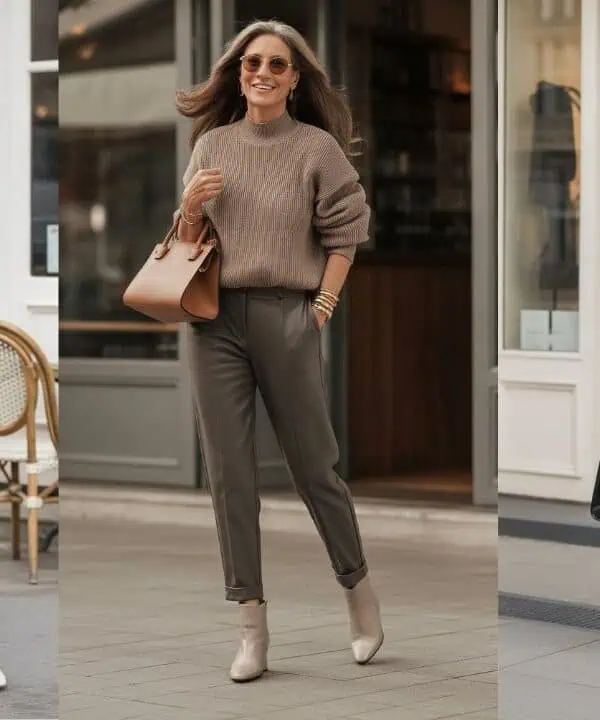
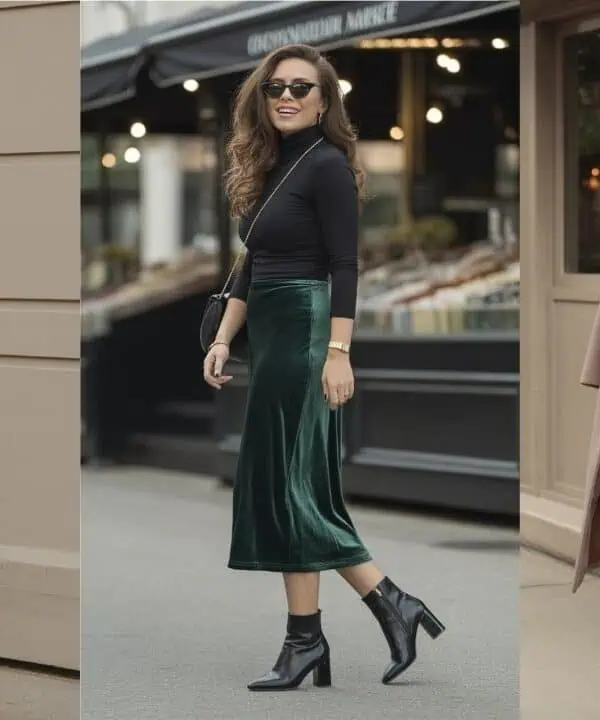
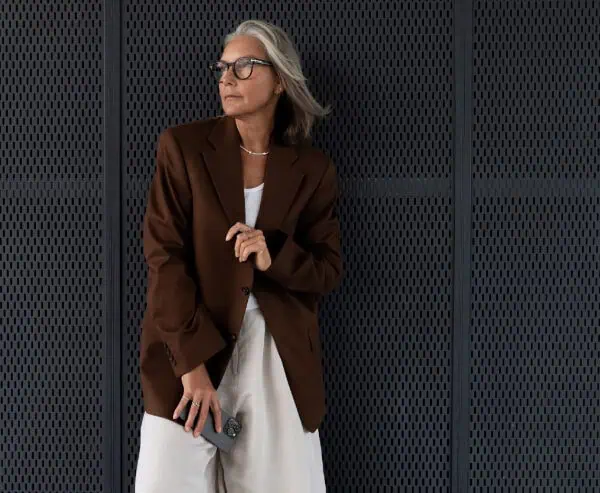
Younger generations don’t identify age through wrinkles or gray hair they recognize it through repetition. When certain items appear unchanged for decades, they become visual shorthand for a specific era. That’s why some wardrobe staples are immediately associated with being “over 60,” even when worn by someone younger. The issue isn’t maturity or personal style it’s stagnation. Fashion today is less about trends and more about proportion, intention, and freshness. Updating or rethinking these items doesn’t mean abandoning comfort or identity. It simply means adjusting how your clothing communicates confidence, relevance, and awareness of modern styling language.
Table of Contents
1. Shapeless Knit Tops With No Defined Structure
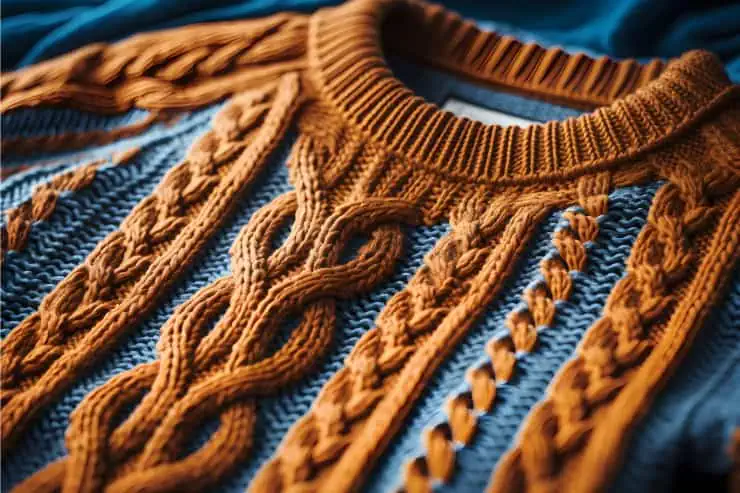
Soft knit tops with dropped shoulders, wide necklines, and boxy shapes are one of the most common visual cues younger generations associate with older style. These tops are often chosen for comfort, but without shape or intention, they collapse the torso and blur natural lines. Younger dressers prioritize relaxed silhouettes with structure think defined shoulders, intentional drape, or purposeful volume. When knitwear lacks all three, it feels passive and dated. The fabric may be comfortable, but the absence of proportion makes the outfit look unfinished. Modern knitwear balances ease with form, even in oversized pieces.
2. Matching Jewelry Sets Worn Together
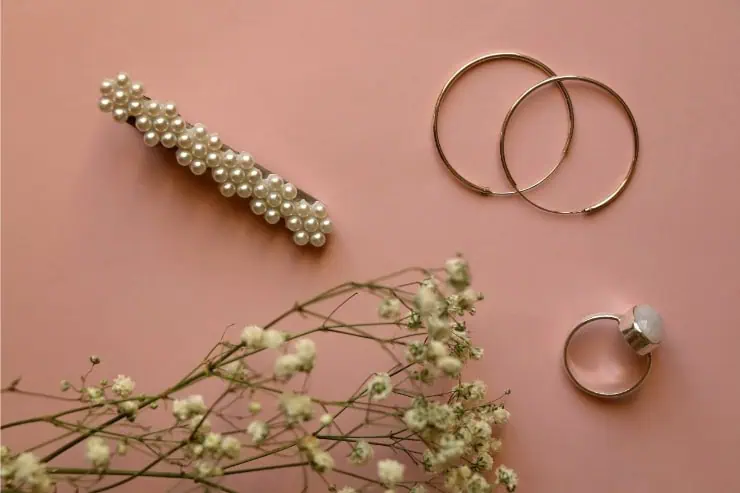
Coordinated necklace-earring-bracelet sets were once considered polished and proper. Today, wearing all pieces together feels overly deliberate and old fashioned. Younger generations prefer contrast and individuality mixing metals, textures, and styles to create a layered look that feels personal. Matching sets read as “safe” rather than stylish. They suggest dressing by rules instead of instinct. Even classic jewelry looks fresher when broken up and paired with unexpected elements. Wearing one standout piece instead of the full set instantly modernizes the look without sacrificing elegance.
3. Elastic Waist Pants Styled Without Contrast
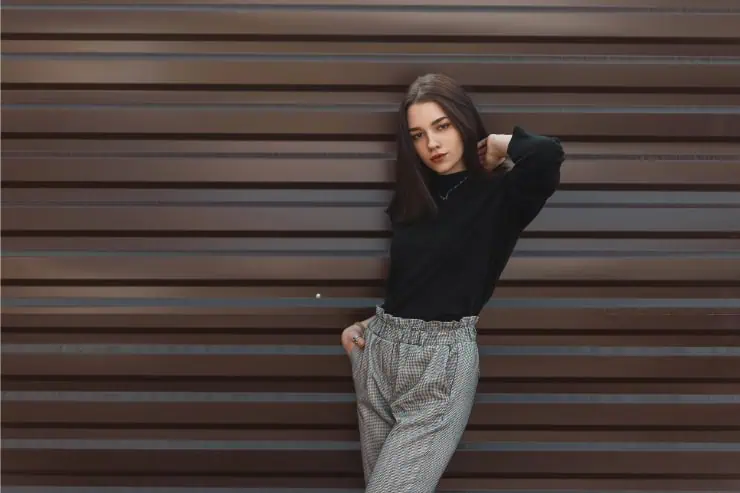
Elastic-waist pants aren’t the issue how they’re styled is. When paired with equally loose tops, flat shoes, and minimal accessories, they signal comfort-first dressing without intention. Younger generations embrace elastic waists when balanced with structure: tailored jackets, sharp shoes, or elevated fabrics. Without contrast, these pants read as loungewear disguised as everyday clothing. The problem isn’t ease it’s predictability. Style today values tension between comfort and polish. When everything is relaxed, the outfit loses visual interest and skews older.
4. Sensible Shoes That Prioritize Function Over Design
Shoes are one of the fastest ways outfits get age-labeled. Chunky walking shoes, orthopedic-style flats, or overly practical loafers immediately communicate a different priority set. Younger generations value comfort too, but they expect it to be disguised within thoughtful design. Sleek soles, modern shapes, and intentional proportions make all the difference. When shoes look designed solely for support, they dominate the outfit visually and anchor it in an older aesthetic. Footwear today blends form and function seamlessly anything that doesn’t feels dated.
5. Overly “Safe” Hair and Makeup Choices
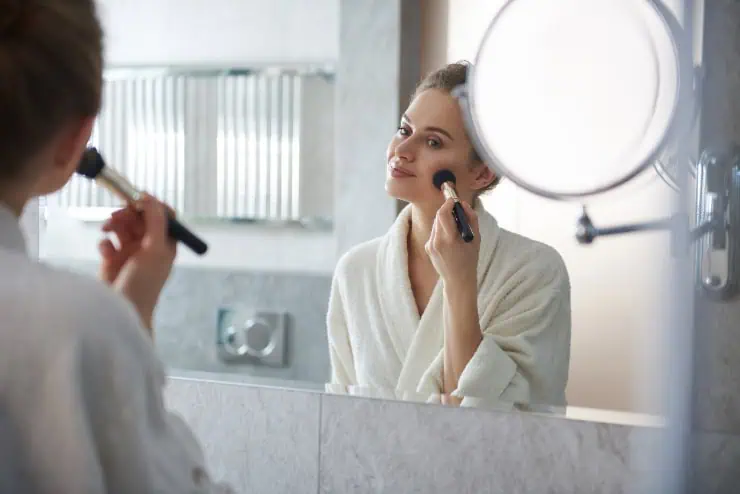
Although not clothing, hair and makeup strongly influence how outfits are perceived. Styles that haven’t changed in decades stiff blowouts, heavy powder, overly dark brows, or dated lipstick shades reinforce age signaling. Younger generations read these choices as resistance to change rather than personal preference. Softness, movement, and freshness matter more than perfection. Even subtle updates in texture, finish, or color can dramatically modernize overall appearance without sacrificing sophistication or comfort.
6. Statement Scarves Worn High and Tight
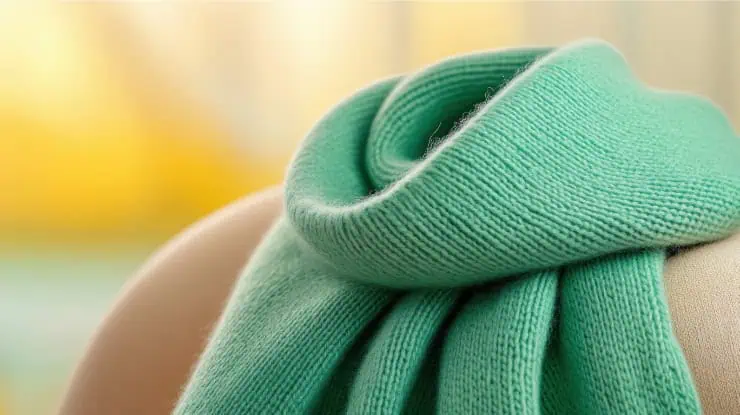
Bold, printed scarves wrapped closely around the neck have become a visual stereotype. Once a symbol of elegance, they now feel heavy and overworked. Younger generations prefer scarves as texture, not focal point loosely draped, neutral, or used sparingly. High contrast patterns near the face can overwhelm features and date an outfit instantly. Scarves aren’t off-limits, but how they’re worn matters. Soft placement and lighter materials feel intentional instead of habitual.
7. Outfits Built Entirely Around Practicality
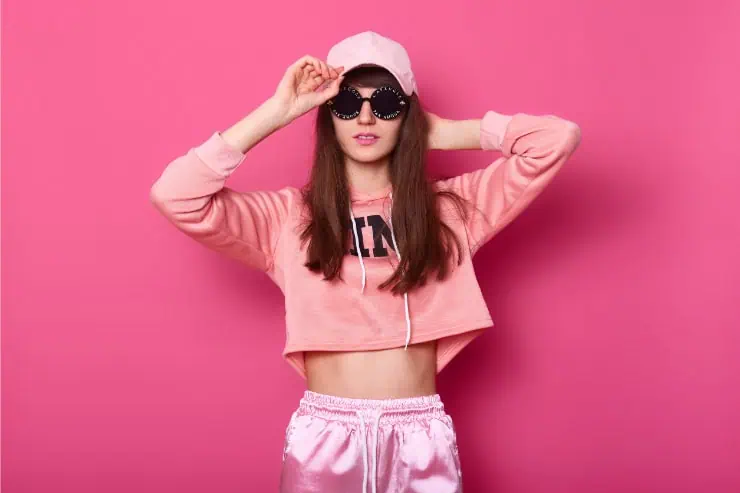
When every item in an outfit is chosen solely for comfort, warmth, or ease, it becomes visually obvious. Younger generations prioritize how something feels as much as how it looks. They expect at least one element a shoe, jacket, accessory, or silhouette to express personality or awareness. Practicality without style reads as resignation rather than confidence. Modern dressing isn’t about suffering for fashion; it’s about making smart, expressive choices that reflect both lifestyle and individuality.